Official product information
How to Read a Supplement Label: The Method, Worked Through
Ten ingredients, ten printed amounts and no proprietary blend, which makes this panel the right place to learn the method: two steps of reading, three of arithmetic and two of comparison, reusable on any bottle.
Quick answer
Read the serving size, then check that every name has an amount beside it. If it does, divide each printed amount by its Daily Value and see whether you get the printed per cent — on this label that is four divisions and all four come out right, folate included, where 230 mcg of folic acid is correctly printed as 383 mcg DFE. Then read the order, read the Other Ingredients line, and set each printed amount against a studied amount while naming the condition that was studied. Seven steps, no equipment.
01 The surface the whole method rests on
A good panel is one you can check
Ten rows, ten printed amounts, and nothing left for a reader to infer.
Most guides to reading a supplement label are written about the bad case, because the bad case is where the writing is easy. This one is written about a good panel, for a reason that turns out to be more useful: once you have read a label that prints everything, you can recognise one that does not in about ten seconds.
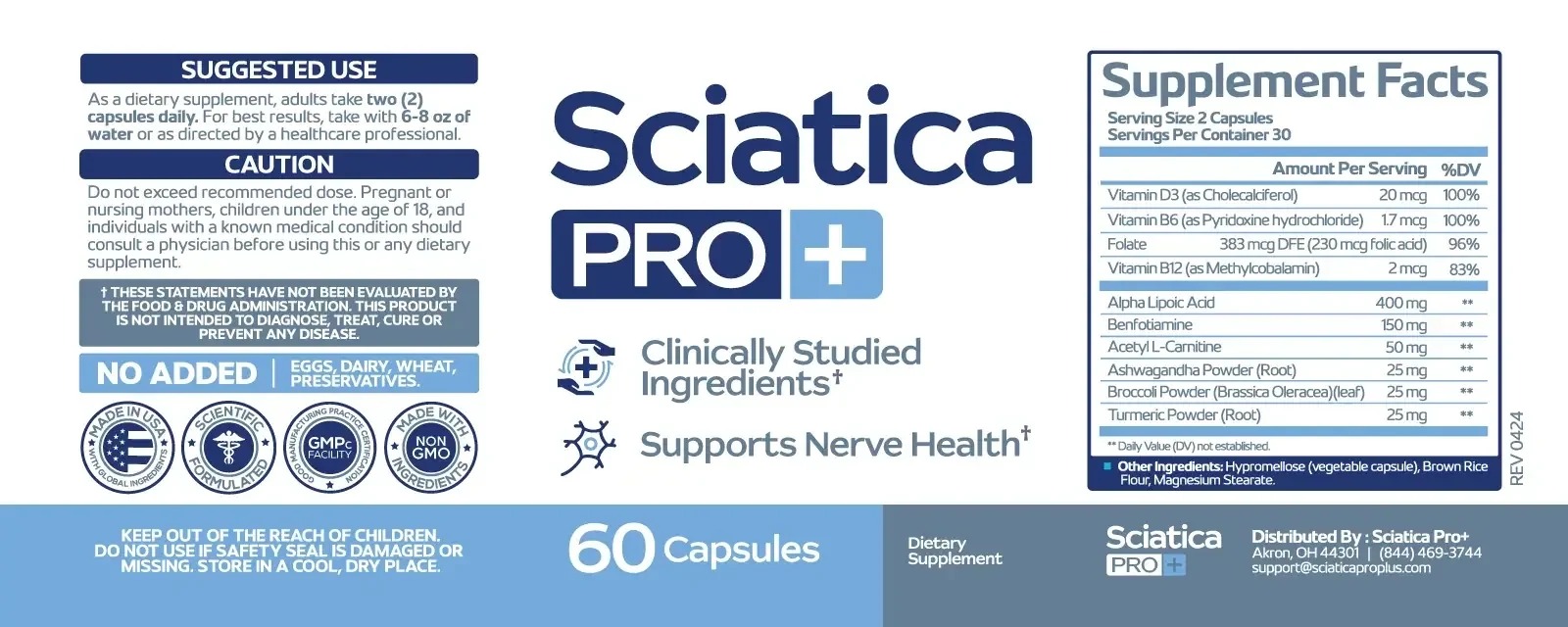
The panel photographed below prints ten ingredients and an amount for every one of them. There is no proprietary blend on it, no pooled total, and nothing a reader has to infer. So every step in the procedure that follows can be demonstrated on a real figure rather than described in the abstract, and the two steps that most readers skip — the percentage check and the unit conversion — can be run all the way through to a result.
None of this needs a laboratory, a background in chemistry or anything beyond the back of a bottle and a willingness to do four divisions.
7 steps, about three minutes
The procedure, in seven steps
Two steps of reading, three of arithmetic, two of comparison, no equipment.
Two steps of reading, three of arithmetic, two of comparison — and each one draws itself as you reach it.
Read the serving size first, not the amounts
Every figure below it is per serving, so a panel read without it is a panel read wrong. This one prints Serving Size 2 Capsules and Servings Per Container 30, and the bottle holds sixty capsules. Three figures that agree with each other, which is the first thing a careful label gets right.
Count the rows, and check every row carries its own figure
This is the step that decides whether the rest is possible. Run your eye down the right-hand column: is there an amount beside every single name, or one total sitting above an indented group? Here there are ten names and ten amounts, with no blend line anywhere.
Divide each printed amount by its Daily Value
The cheapest honesty test on any label. Four rows here carry a per cent: 20 over 20 mcg is 100%; 1.7 over 1.7 mg is 100%; 383 over 400 mcg DFE is 95.8%, printed as 96%; 2 over 2.4 mcg is 83.3%, printed as 83%. Four for four.
Do the unit conversion on any row that prints two numbers
The folate row prints 383 mcg DFE (230 mcg folic acid), and those are two different units. ODS gives the factor in one sentence, so the working is 230 times 400 over 240 = 383.3, rounded to 383. A label that gets a two-unit conversion right and then the percentage that depends on it is a label somebody checked.
Read the order: the rows are printed heaviest first
The printed sequence inside a group is a ranking by weight, not a preference. Here the vitamins come first in panel convention and then the six non-vitamin rows descend: 400 mg, 150 mg, 50 mg, then three rows at 25 mg. The order tells you where the formula’s weight actually sits, which is rarely where the marketing points.
Read the Other Ingredients line, and know what it is for
It is not a second list of actives. It is the capsule, the filler and the flow agent — here hypromellose (vegetable capsule), brown rice flour, magnesium stearate — and it is where a vegetarian or allergy question is actually answered. The shell being a vegetable capsule rather than gelatin is the printed basis for the vegetarian mark.
Set each printed amount against a studied amount, and name the condition
The last step is the only one that needs a second source, and it is the one that matters. 400 mg of alpha lipoic acid against the 600 mg a trial in diabetic polyneuropathy called optimal is two-thirds. 150 mg of benfotiamine against a 300 mg arm in diabetic polyneuropathy is one half. 50 mg of acetyl L-carnitine against 1,500 mg in diabetic peripheral neuropathy is one thirtieth. Name the condition every time, or the comparison misleads.
677 mg of declared actives, every milligram itemised
Worked on a real panel
Ten printed amounts, four checked percentages, and three rows with no federal figure to set them against.
Run the seven steps on this panel and the table below is the result. Nothing in it is an estimate: every figure in the third column is quoted from the photograph, and the fourth column is the check. The four per-cent rows pass, the three trial rows come out as fractions below one, and the three plant powders have nothing federal to be compared with.
Six of the ten rows carry the footnote “** Daily Value (DV) not established.” rather than a percentage, and that is not a failure of the label. It means no Daily Value has been established for those ingredients, so there is no official reference amount for a percentage to be a percentage of. The arithmetic on those rows has to come from the research instead, which is the seventh step.
| Row | Ingredient, as printed | Amount per serving | %DV | What a reader can check |
|---|---|---|---|---|
| 1 | Vitamin D3 (as Cholecalciferol) | 20 mcg | 100% | Printed. 20 over a Daily Value of 20 is 100% — correct |
| 2 | Vitamin B6 (as Pyridoxine hydrochloride) | 1.7 mg | 100% | Printed. 1.7 over 1.7 is 100% — correct, and the most restrained row here |
| 3 | Folate | 383 mcg DFE (230 mcg folic acid) | 96% | Printed. 383 over 400 is 95.8% — correct, and the conversion behind it is correct too |
| 4 | Vitamin B12 (as Methylcobalamin) | 2 mcg | 83% | Printed. 2 over 2.4 is 83.3% — correct |
| 5 | Alpha Lipoic Acid | 400 mg | ** | Printed. The largest row on the panel, and two-thirds of the 600 mg a diabetic-polyneuropathy trial called optimal |
| 6 | Benfotiamine | 150 mg | ** | Printed. Half the 300 mg lower arm of a diabetic-polyneuropathy trial |
| 7 | Acetyl L-Carnitine | 50 mg | ** | Printed. One thirtieth of the 1,500 mg lowest dose in the diabetic-neuropathy trials a Cochrane review examined |
| 8 | Ashwagandha Powder (Root) | 25 mg | ** | Printed. No federal consumer amount for nerve pain to compare it with |
| 9 | Broccoli Powder (Brassica Oleracea)(leaf) | 25 mg | ** | Printed. No federal consumer amount for nerve pain to compare it with |
| 10 | Turmeric Powder (Root) | 25 mg | ** | Printed. No federal consumer amount for nerve pain to compare it with |
Four per-cent rows, four correct. Three rows with a named trial, all three below the studied amount and all three studied in diabetic neuropathy rather than in sciatica. Three rows with no federal figure at all.
1 total, and no member figures at all
What the bad version looks like, by contrast
A blend hands you a ranking and keeps the arithmetic.
Now the contrast, because the method above only works on a panel that cooperates, and that is the point of learning it on one that does.
A proprietary blend prints one weight for a named mixture and no weight for any member of it. The members are listed underneath, indented, in descending order of weight, and that order is the only quantity information the format gives away. Faced with one, a reader can say which ingredient is heaviest and which is lightest, and nothing else. Ask what a row weighs and the honest answer is a range or a ceiling. Every statement becomes at most or at least, and not one of them is an amount.
Three things stop working at once. The percentage check cannot be run on a pooled row, because there is no per-ingredient figure to divide. The comparison against a studied amount cannot be run either, because the thing you would compare does not exist on the label. And the marketing becomes impossible to audit: a trial at 600 mg says nothing about a row that might be 600 mg or might be 6 mg.
So the ten-second test on any panel is the second step of the procedure, and it is worth learning on its own: look for an amount beside every name. If there is one, the label has handed you the arithmetic. If there is a total above an indented list instead, the label has handed you a ranking and kept the arithmetic. This desk has examined one label and makes no comparative claim about any other product; what is being described here is a format, not a competitor.
4 things that look like answers
Four traps underneath the method
Each of these will hand you a number. None of them will hand you a true one.
Four things look like answers and are not. Learning them is the difference between using the method and being used by it.
A missing percentage is not a missing amount
Six rows here print “** Daily Value (DV) not established.” and no per cent. That is the correct way to label an ingredient with no established Daily Value, and it tells you nothing bad about the row. The amount is still printed, which is the part that matters. Read the absence as what it is: no official reference figure exists, so the comparison has to come from a trial instead.
A printed amount is a declaration, not a measurement
400 mg on a panel is what the manufacturer says is in the capsule. It is not a test result for the bottle in your hand. Three reference strings arrived with the pack: a lot code SP-26/MY-6297, a certificate-of-analysis reference SP-6297-26-MY, and a label revision REV 0424. No certificate document was supplied with any of them. A certificate reference is a filing number; the certificate is the thing that says what was in the batch and who measured it. Until the document is attached, these are reference strings and this site reports them as reference strings. Ask the order desk for the document itself, for this lot, in writing.
An extract ratio that is not attached to a named row tells you nothing
One absence is worth naming, because on many labels it is where the real argument hides. No extract ratio, concentration or dry-weight equivalence is printed for any row on this panel. The three botanical rows are printed as powder — ashwagandha powder, broccoli powder, turmeric powder — not as standardised extracts, and no footnote converts them into anything else. On a blend label that silence would matter. Here it does not, because the amount is already printed: 25 mg of powder is 25 mg of powder, and there is nothing for a ratio footnote to rescue.
A big number split many ways can be worse than a small number split two ways
The one that costs buyers the most. About 677 mg of actives sounds like a lot and almost all of it is one ingredient: alpha lipoic acid at 400 mg is nearly three fifths of the total on its own, and three of the ten rows are 25 mg each. A total without its split is half a fact, which is exactly why the split is the thing this panel prints and most do not.
02 The comparison, and the one question
What to compare a printed amount against
A printed amount beside a studied amount is useful; a printed amount alone is decoration.
A printed amount means nothing on its own. It means something beside a published figure for the same ingredient, and those figures are free. NIH’s Office of Dietary Supplements publishes consumer fact sheets with a recommended amount and an upper limit; a named clinical trial gives a studied amount and, crucially, a studied population.
Then compare in the direction that favours nobody. On this label the comparison is kind in two places and unkind in three. Kind: vitamin B6 at 1.7 mg against a federal upper limit of 100 mg and ODS’s warning that “taking high amounts of vitamin B6 from supplements for a year or longer can cause severe nerve damage” — restraint on the one ingredient here where excess causes the very kind of symptom the product is bought because of. Kind again: folate at 383 mcg DFE against an upper limit of 1,000 mcg. Unkind: the three trial rows, at two-thirds, one half and one thirtieth of the studied amounts, in a condition that is not the one on the front of the bottle.
And one question does more work than all of it, because it closes the gap between what a label declares and what a batch contains: “Will you send me the certificate of analysis for this lot?” Not the reference number — the document. A seller who holds one will send it. Ask by email, before you pay, so the answer carries a date. The order desk here is +1 (302) 200-3480 and [email protected], and what to ask it for is set out on the batch check page.
0 tests this method performs
The honest limit of all this
It reads a label. It does not test a product, and it never predicts an outcome.
Now the limit, because a method sold beyond its reach is just another kind of marketing. This procedure reads a label. It does not test a product. Every check above operates on what is printed, and the strongest statement it can produce is that the printed figures are internally consistent and that they sit at a stated fraction of a studied amount. That is genuinely useful and it is not a laboratory.
What it cannot do: tell you what is actually in the capsule, tell you whether the extraction was any good, or turn a fraction into a prediction. The GMP line printed on this label — GMPc FACILITY (Good Manufacturing Practice Certified) — is a statement about process rather than a test of this batch, and it names no facility and no certifying body. FDA does not test supplements before they are sold. And a printed amount that lands inside a studied range is not evidence of an effect: the arithmetic can say an amount is far below what was studied. It can never say an amount is large enough to work.
Nor is any of it advice about your body. If you take medicine, the panel goes to a pharmacist, for the reasons set out on side effects. And if the reason you are reading a label is a symptom rather than a purchase, the label is the wrong document: MedlinePlus says “Treatment, if needed, depends on the cause of the problem. It may include exercises, medicines, and surgery.” None of those three things is a capsule, and the symptoms that mean contact a provider today are printed in full on sciatica itself.
What the method does do is stop a number on a bottle from doing work it has not earned — and it is worth closing on what this particular label does right, because it is the reason this page could be written at all. Ten rows, ten printed amounts, four correct percentages, a two-unit conversion handled properly, the plant part named on all three botanical rows, a complete other-ingredients line, a real caution paragraph, a storage line, a tamper-seal instruction, a lot code and a label revision.
Questions
Sciatica Pro FAQ: reading a label questions
Does Sciatica Pro have a proprietary blend?
No. Every one of the ten rows carries its own figure and nothing is pooled into a total. Say that plainly, because it is rare: a blend prints one number for a group and leaves a reader unable to state any individual amount at all.
Is the %DV on the Sciatica Pro label correct?
Yes, on all four vitamin rows, and this desk checked each one. Vitamin D3: 20 of a 20 mcg Daily Value is 100%. Vitamin B6: 1.7 of 1.7 mg is 100%. Folate: 383 of 400 mcg DFE is 95.8%, printed as 96%. Vitamin B12: 2 of 2.4 mcg is 83.3%, printed as 83%.
What does 383 mcg DFE (230 mcg folic acid) mean on the label?
It is a unit conversion, and the label got it right. NIH’s Office of Dietary Supplements states that “240 mcg of folic acid and 400 mcg of folate are both equal to 400 mcg DFE”, a factor of 1.667. So 230 mcg × (400 ÷ 240) = 383.3, rounded to 383 mcg DFE, and 383 of 400 is the 96% printed beside it.
How much of each ingredient is in Sciatica Pro?
All ten amounts are printed on the panel and all ten are listed in the answer above. There is no proprietary blend, so nothing has to be derived, bounded or guessed at. That is the single most unusual thing about this label.
What are the other ingredients in Sciatica Pro?
Verbatim from the label: “Hypromellose (vegetable capsule), Brown Rice Flour, Magnesium Stearate.” The first is the capsule shell, the second is the filler, the third is the flow agent that keeps the fill weight consistent.
How many milligrams of active ingredients are in a serving?
About 677 mg, and because every amount is printed it is an addition rather than an estimate: 400 + 150 + 50 + 25 + 25 + 25 is 675 mg, plus 1.7 mg of B6, plus 20 + 230 + 2 micrograms, which is another 0.252 mg. The folate is counted as the 230 mcg of folic acid actually in the capsule rather than as the 383 mcg DFE equivalence.
References
Sources for this page
- NIH Office of Dietary Supplements. Folate — Consumer. ods.od.nih.gov. Accessed October 11, 2026.
- NIH Office of Dietary Supplements. Vitamin B6 — Consumer. ods.od.nih.gov. Accessed October 11, 2026.
- NIH Office of Dietary Supplements. Vitamin D — Consumer. ods.od.nih.gov. Accessed October 11, 2026.
- NIH Office of Dietary Supplements. Vitamin B12 — Consumer. ods.od.nih.gov. Accessed October 11, 2026.
- Ziegler D and others, Diabetes Care. Oral treatment with alpha-lipoic acid improves symptomatic diabetic polyneuropathy: the SYDNEY 2 trial. pubmed.ncbi.nlm.nih.gov. Accessed October 11, 2026.
- Cochrane Database of Systematic Reviews. Acetyl-L-carnitine for the treatment of diabetic peripheral neuropathy. www.cochrane.org. Accessed October 11, 2026.
Next
Keep reading
This panel, line by line
The whole Supplement Facts panel transcribed, with the footnote and the caution.
Read itTen rows, ten printed amounts
Why there is no blend here, and what that lets a buyer check.
Read itAll ten ingredients
A dossier each, with the printed amount and whatever federal page exists.
Read itOrder Sciatica Pro from the official page
60 capsules a bottle, two a day, thirty days a bottle. Ten ingredients, ten printed amounts, no proprietary blend, and about 677 mg of declared actives a serving. Price and guarantee are read from the live checkout. Order support +1 (302) 200-3480.
Price and guarantee are read on the checkout page — screenshot it with the date before you pay · ships from inside the US · order support +1 (302) 200-3480